Bibliography:
This is Not a Surrealism - A Manifesto for and against the Simulcara of Surrealism,
Sydney: Apothecary Archive Publishing, 2024.
“Ontological Withdrawal and the Symbols of Symbolism” Senzacornice - Rivista online di arte contemporanea e critica, 23 “Simbolo”, Nov 2020 - Feb 2021.
Studies:
Hunter’s Dog
Booklet, 70 pages with black and white illustrations, $25.
https://apothecaryarchive.com/the-apothecary-archive-press-1/this-is-not-a-surrealism-by-simon-weir
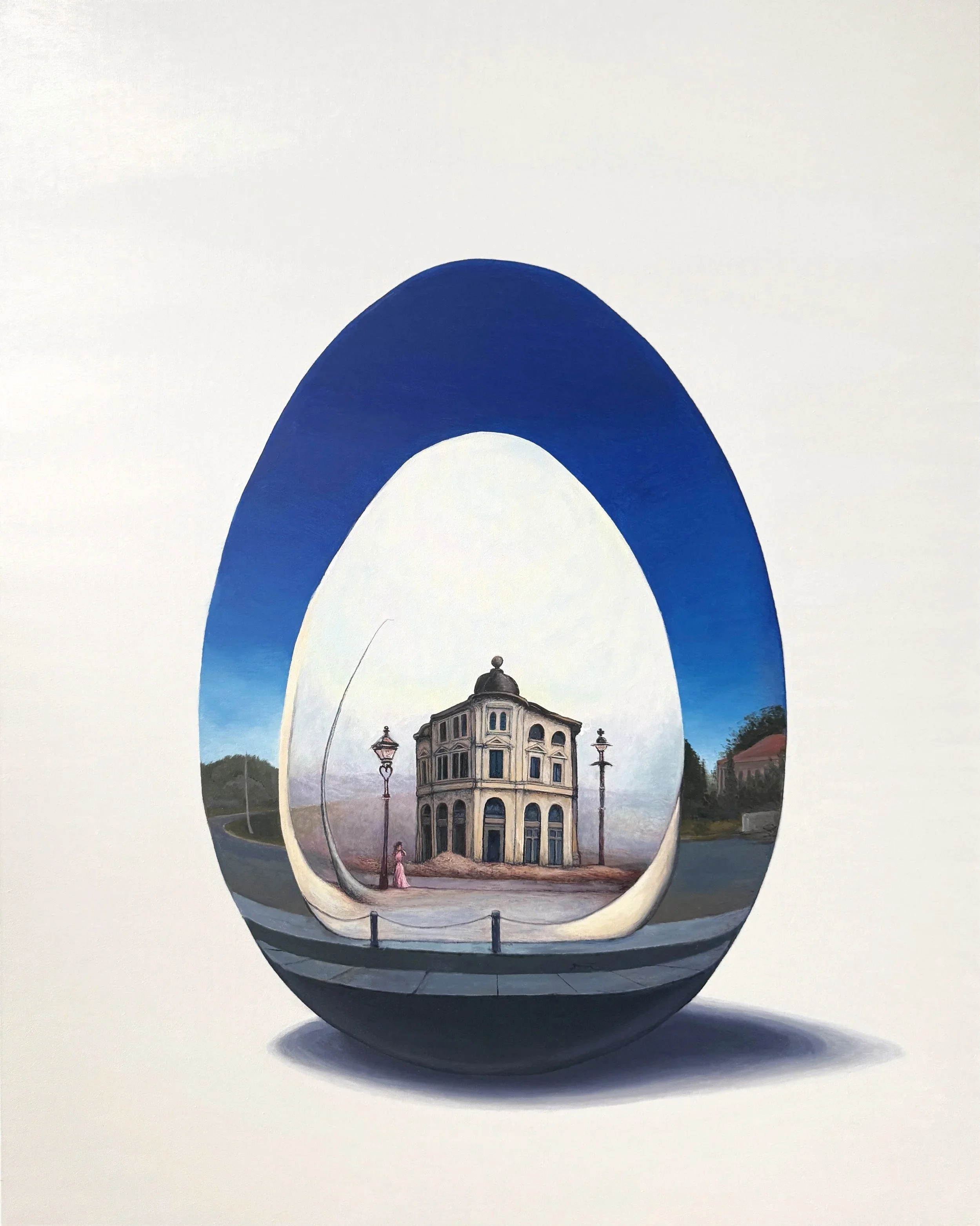
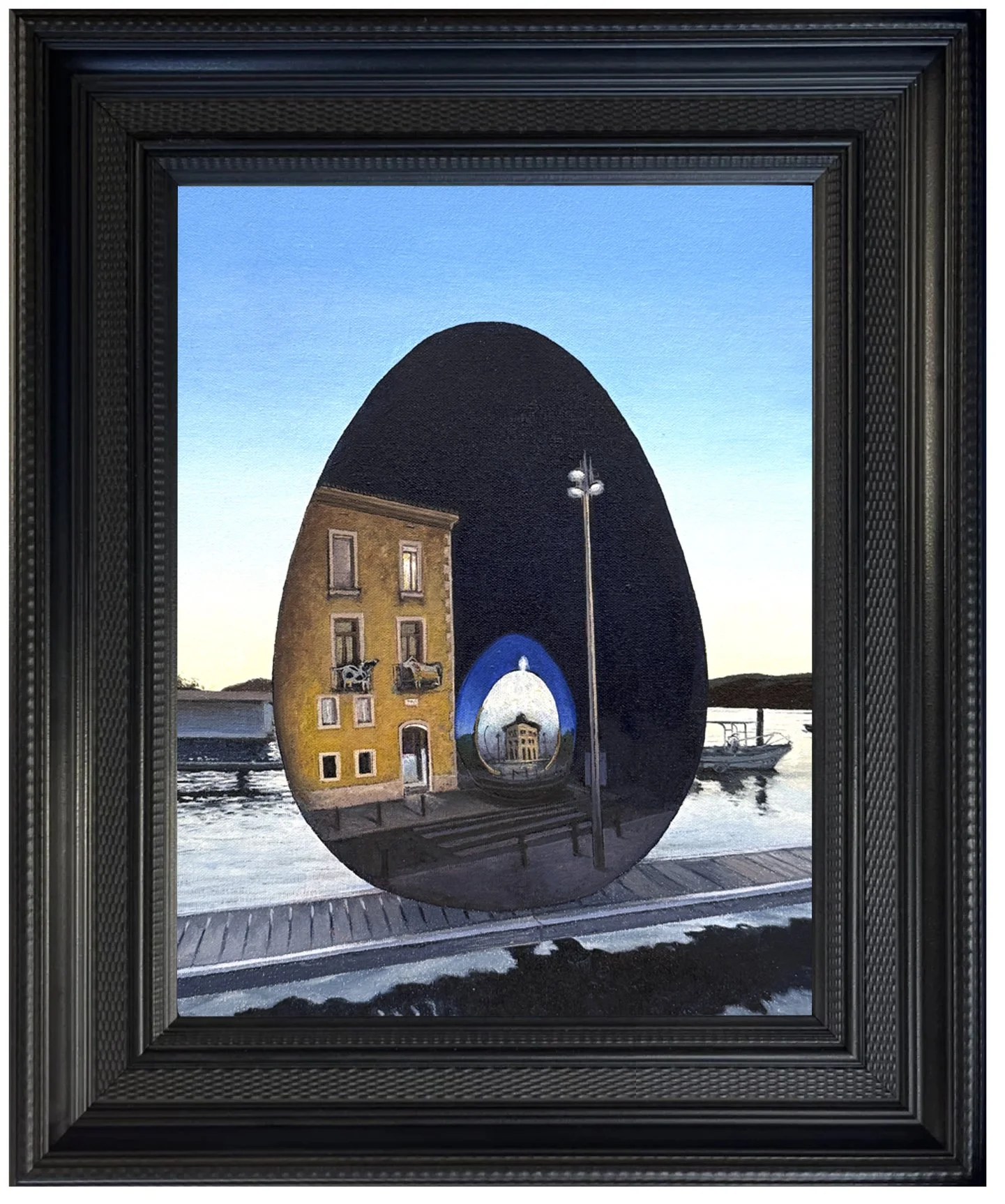
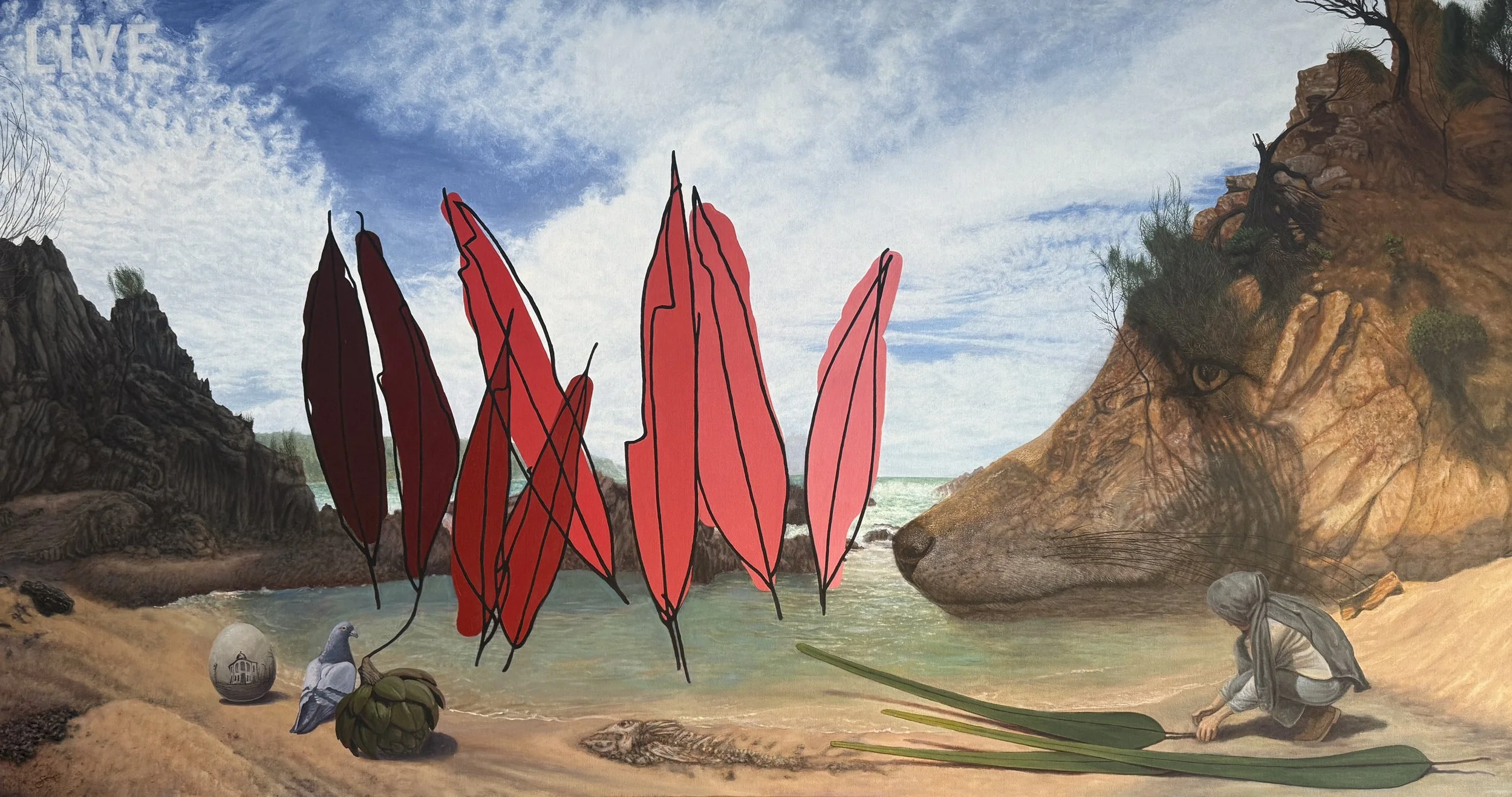
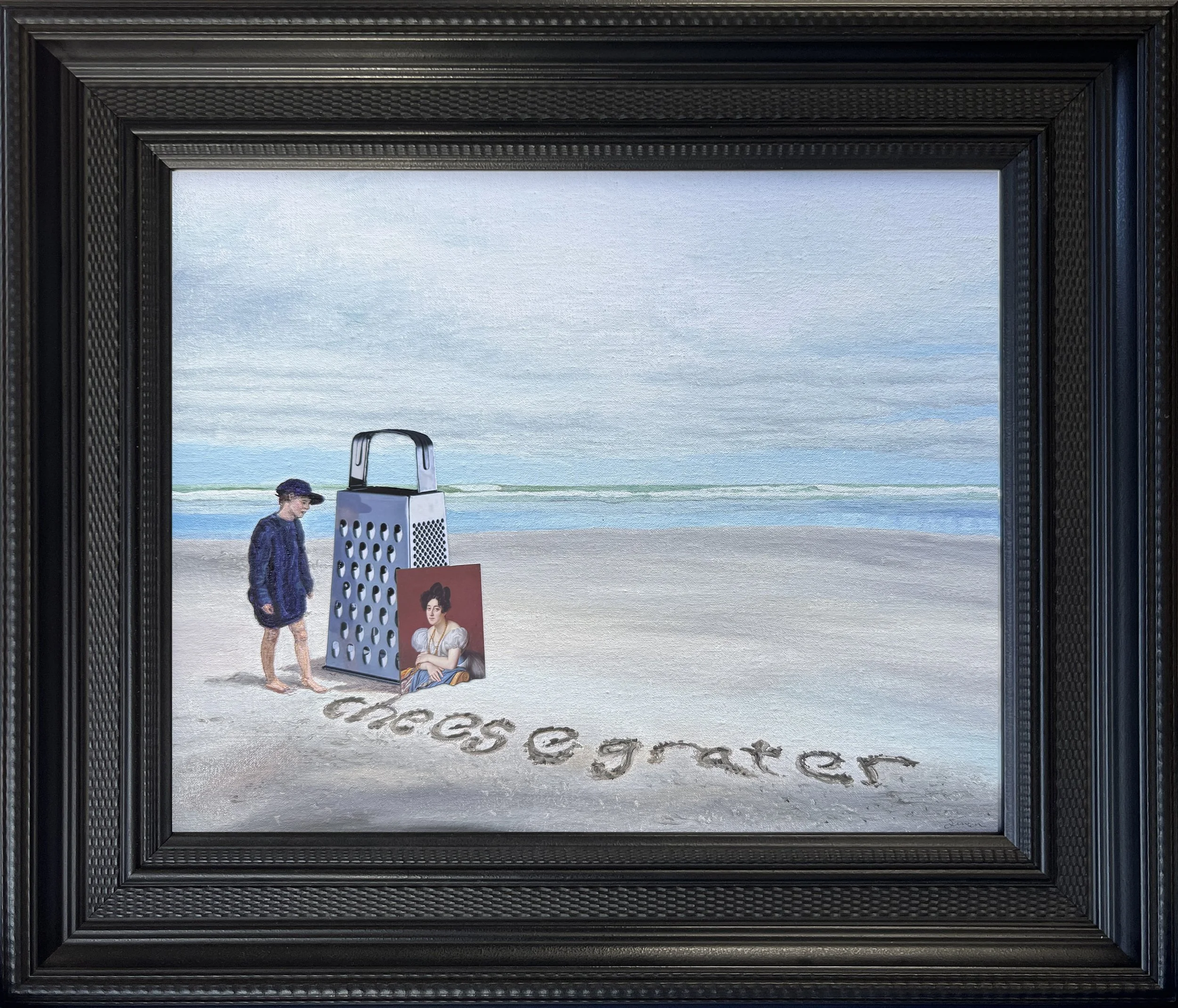
In recognition of a preoccupation with the problems of the simulacra, there are increasingly images of images
The appearance and disappearance of an image.
And all of this occurring while an urge towards dwelling can be recognised in the construction of space and forms of covering and shelter.
One evening I was retiring in bed looking across the room at my painting, “Melancholy of the Moment (Ecologies of inception), and I instantaneously imagined that painting painted onto an egg.
https://www.instagram.com/reel/DYtSInGhnwi/?igsh=MXhlN3BmdjAxdjNyeA==
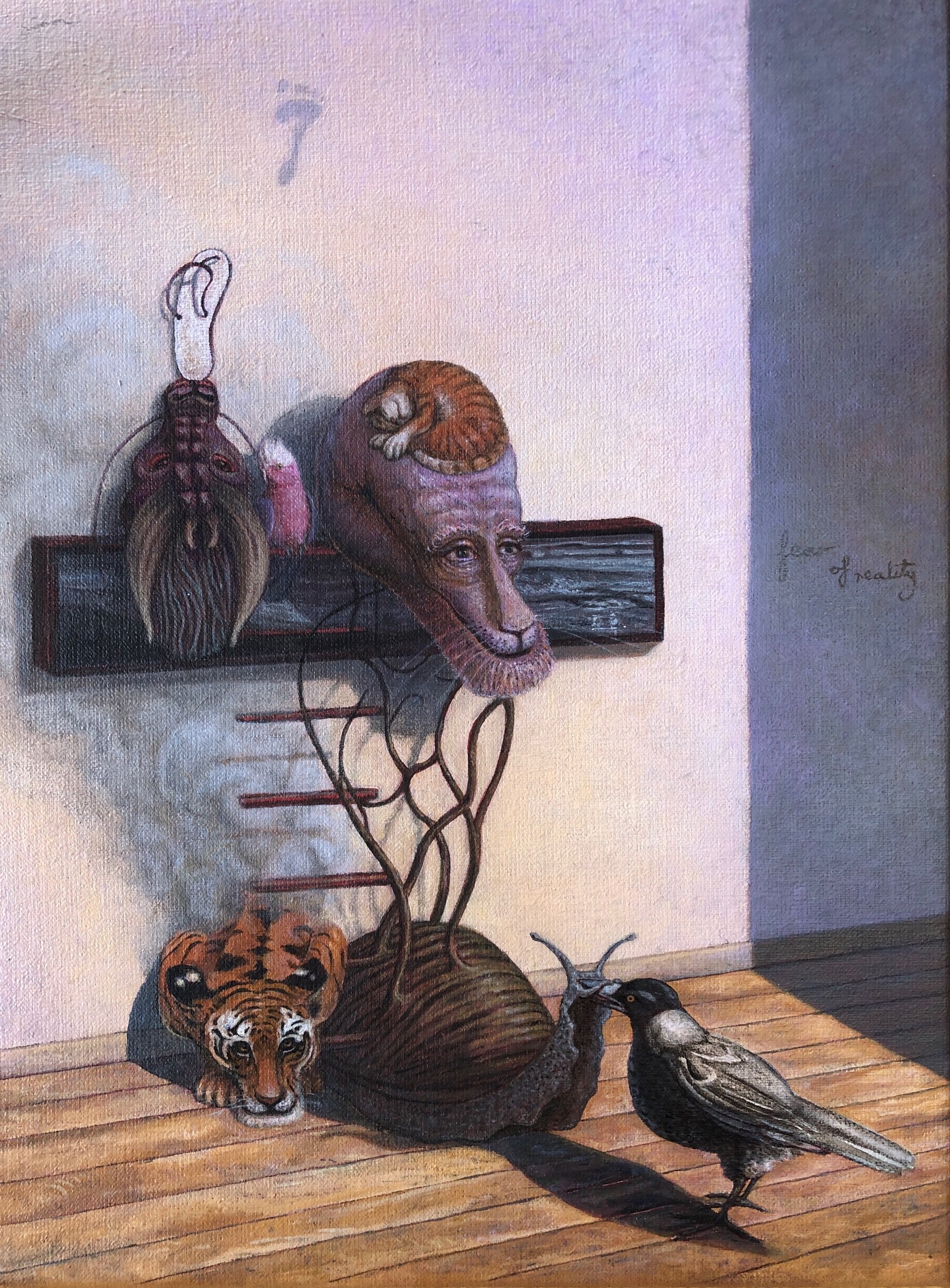
A Portrait as a collection of objects, as an interrelationship between active personalities, concrete objects, some confusions, and some illusions.
+
Exhibitions:
2023, “SUPRA: 100 Years of Global Connections” International Student Lounge, The University of Sydney, NSW.
Finalist: 2020 “Lethbridge 20 000 Small Scale Art Award” Lethbridge Gallery, Paddington QLD.
Finalist: 2020 “Collie Art Prize” Collie Art Gallery, Collie WA.
+
Prints Available:
https://www.pineapplegallery.com.au/buy-prints/simon-weir-sensual-ontographic-assemblage-portrait-of-my-wife/
Studies: Electrolyte Requiem.
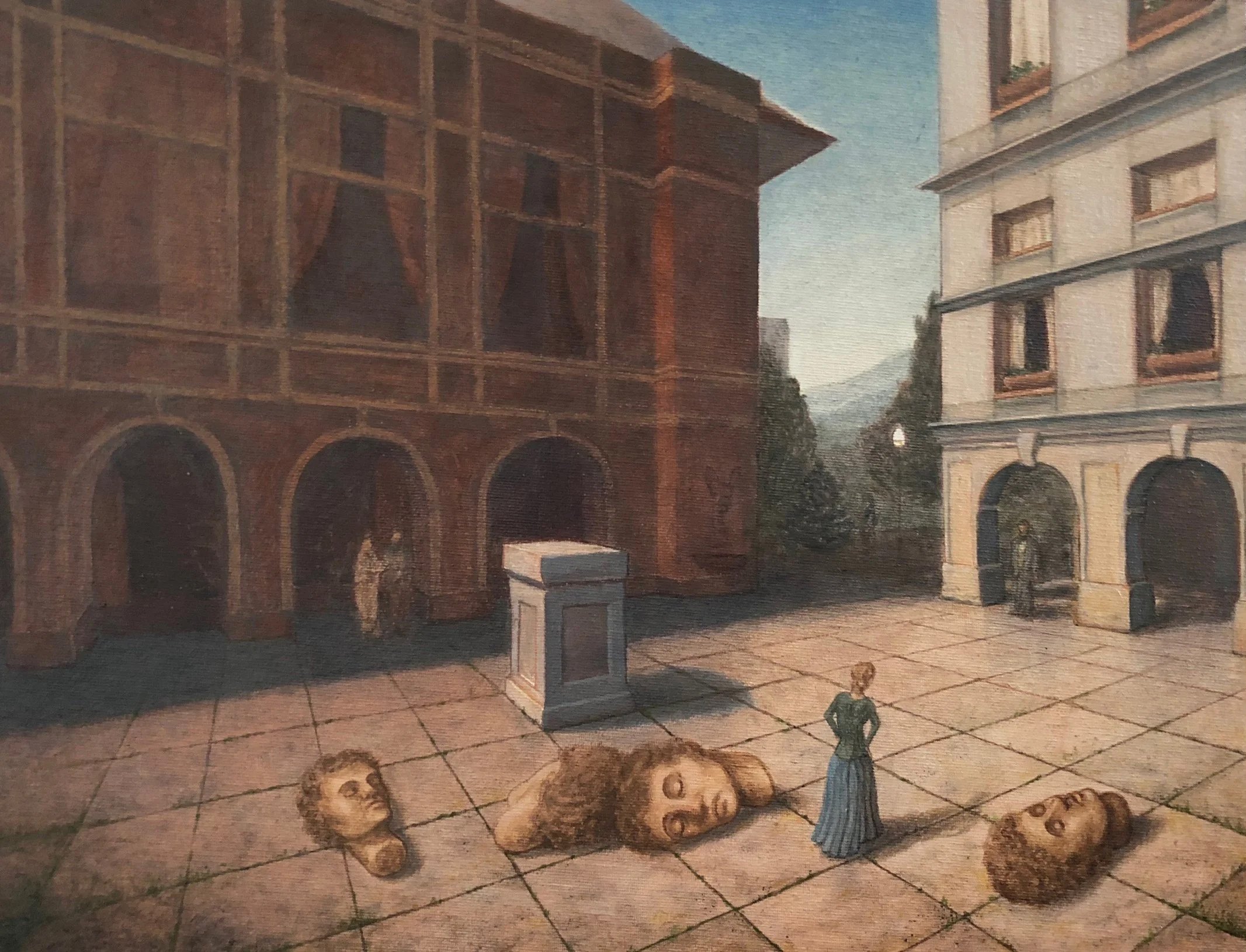
The Architectural Uncanny is a transitional painting, and return to dream-oriented, unconsciously figured, inspirationally motivated, Surrealism. Drawn in a Catalan cafe over 5 days, then painted with great intensity in two sessions one on Figueres then one in Sydney three years later. It depicts an unconscious, multi-generational, romantic idealisation in the appearance of four people, uncanny architecture, public sculpture and distant landscape.
The shadows we cast onto our landscapes, and the spectres that seem so real but defy validation. We live in both the real and the imaginary.
The painting in the painting exists as a separate study - see here.
+
Exhibitions:
Finalist: 2022 “Lethbridge 20 000 Small Scale Art Award”, Lethbridge Gallery, Paddington QLD.
Shortlist, 2021 “Into the Light”, Whitewall Art Prize, Berrima NSW.
Painting recoloured 2022.
Featured in Talking with Painters "Entrants to the 2024 Archibald, Wynne and Sulman prizes talk with Maria Stoljar" (YouTube)
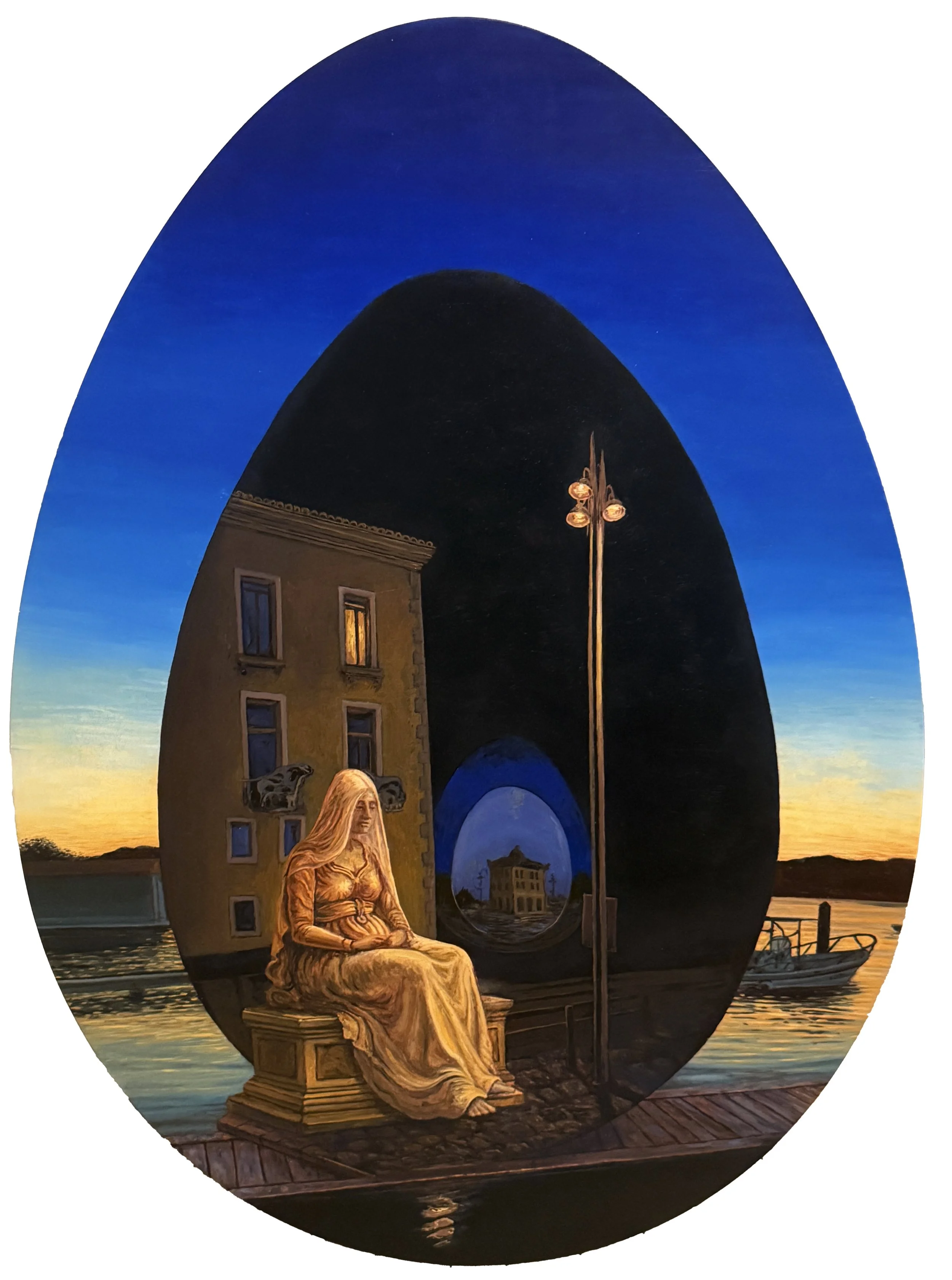
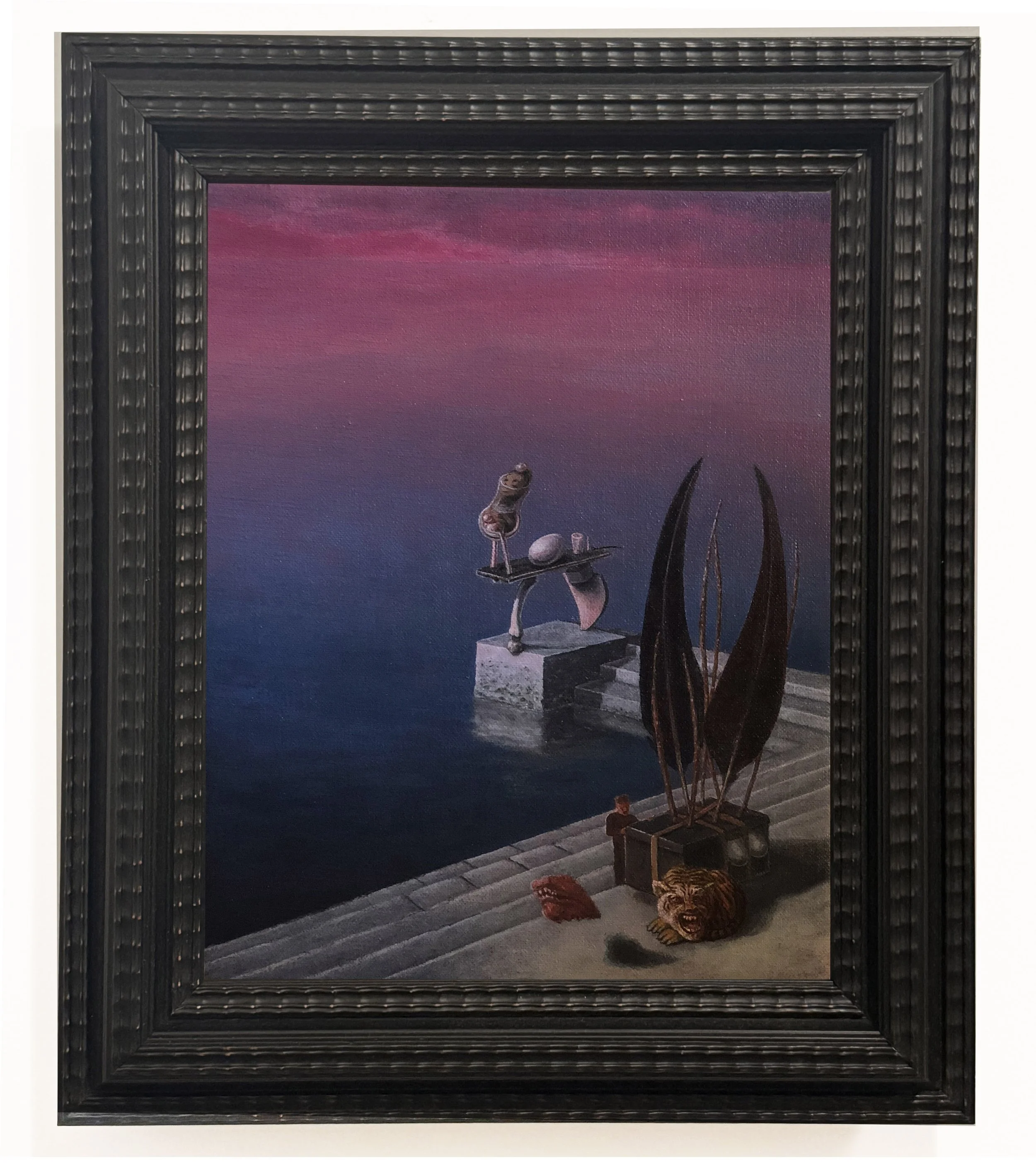
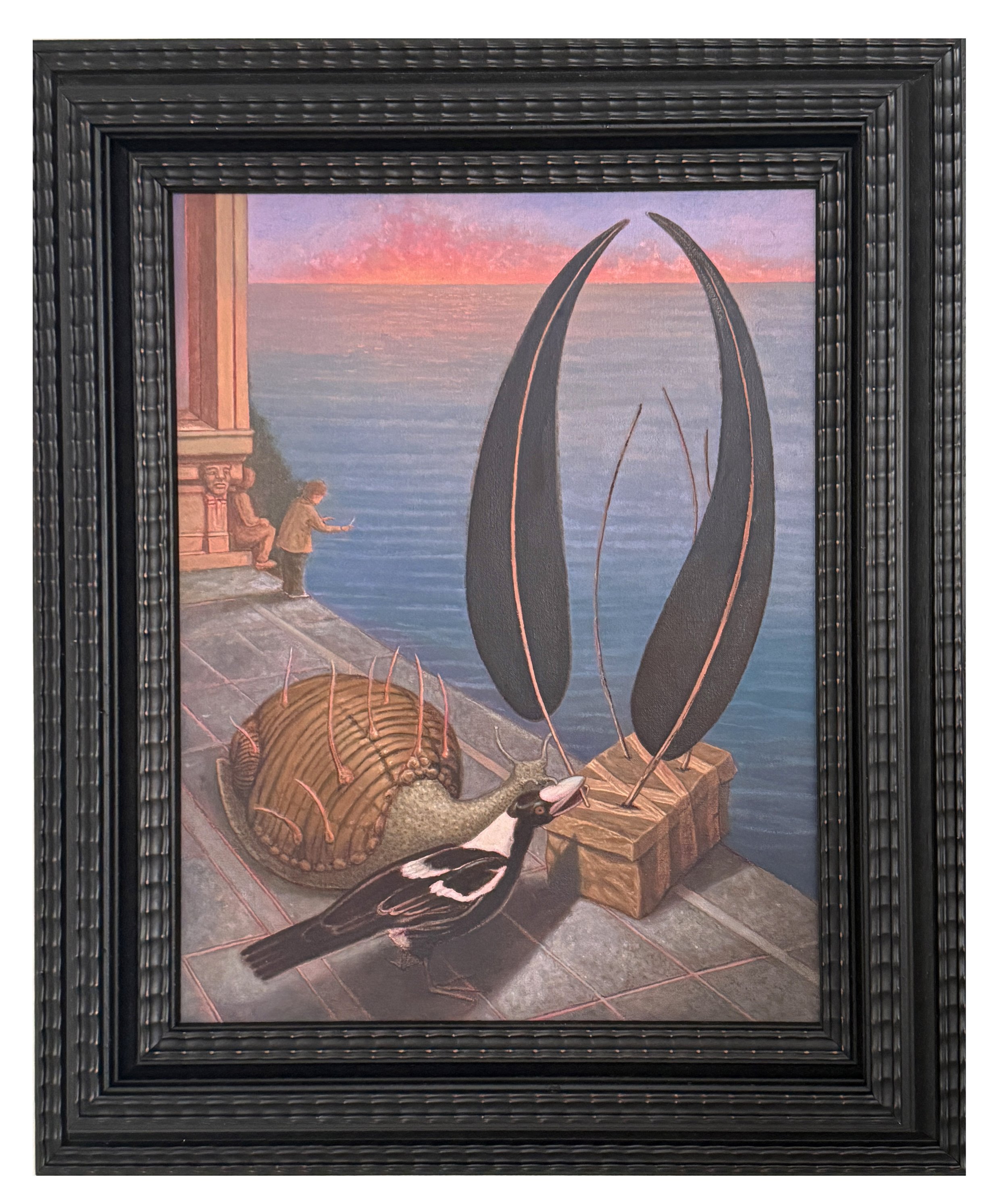
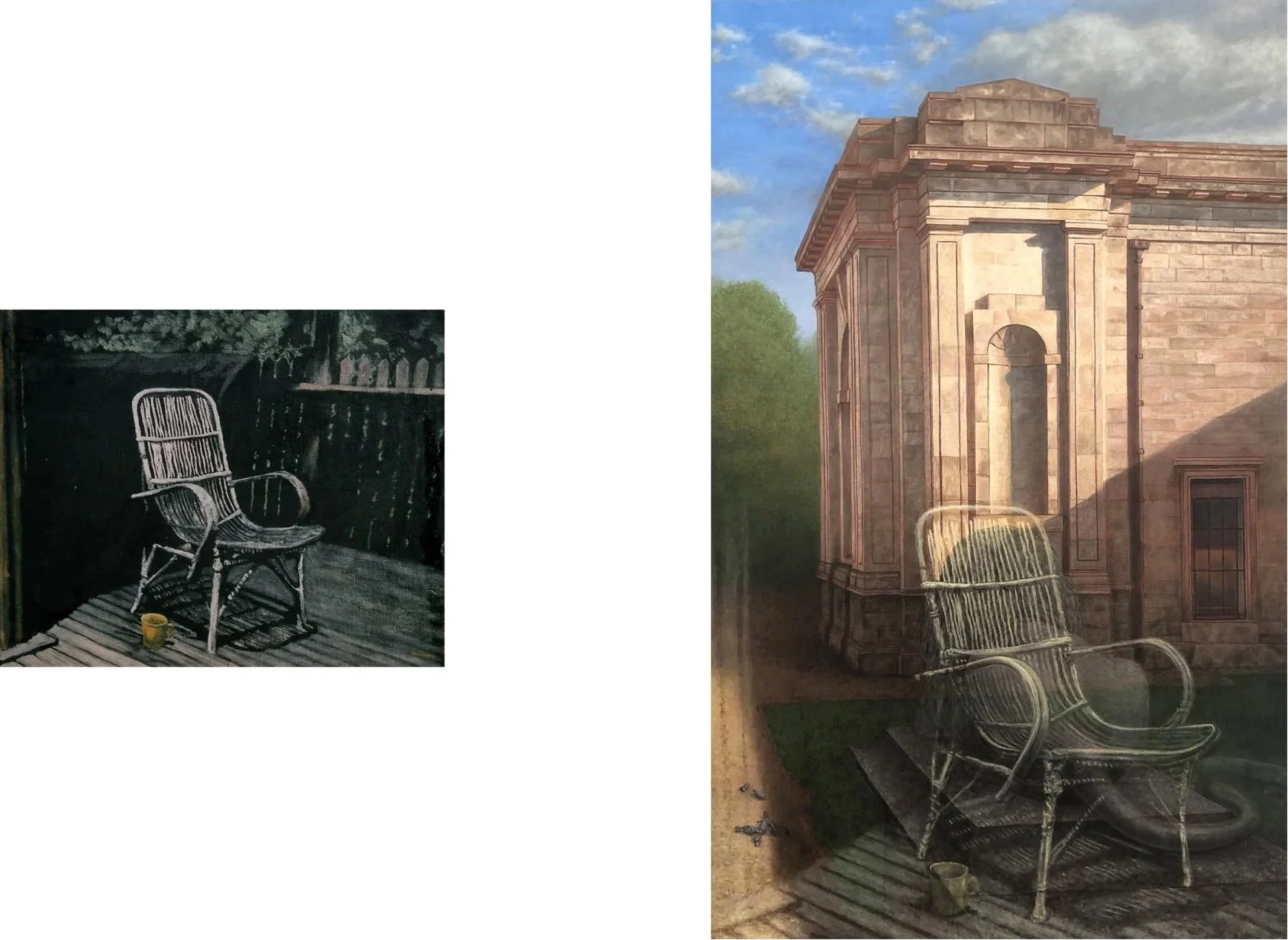
In the infra-realism of object-oriented ontology, reality is withdrawn behind the sensual. Art’s sensual objects have conscious and unconscious qualities that generate convincing illusions of impossible objects. When the subject of art is the withdrawn real, we see concealing veils.
The Blackfeather Sanctuary is celebrated and elevated while remaining withdrawn, veiled, decoyed, tended and guarded.
+
Exhibitions:
Finalist: 2021 “Lethbridge 20 000 Small Scale Art Award”, Lethbridge Gallery, Paddington QLD.
Bibliography:
“Ontological Withdrawal and the Symbols of Symbolism” Senzacornice - Rivista online di arte contemporanea e critica, 23 “Simbolo”, Nov 2020 - Feb 2021.
“Object Oriented Ontology and Architectural Darkness”
Odyssey, Harvest, Sydney, 2021, pp.148-151.
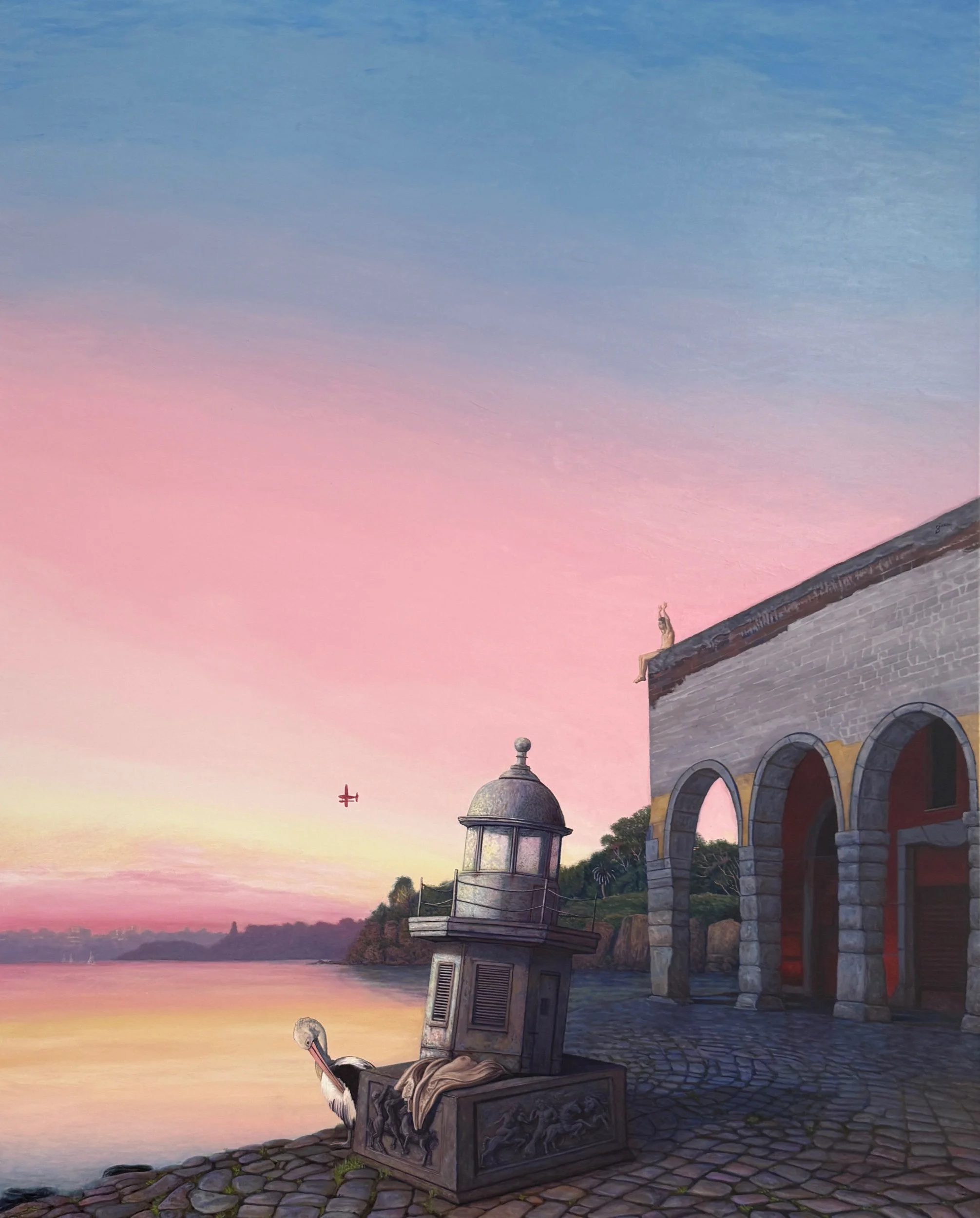
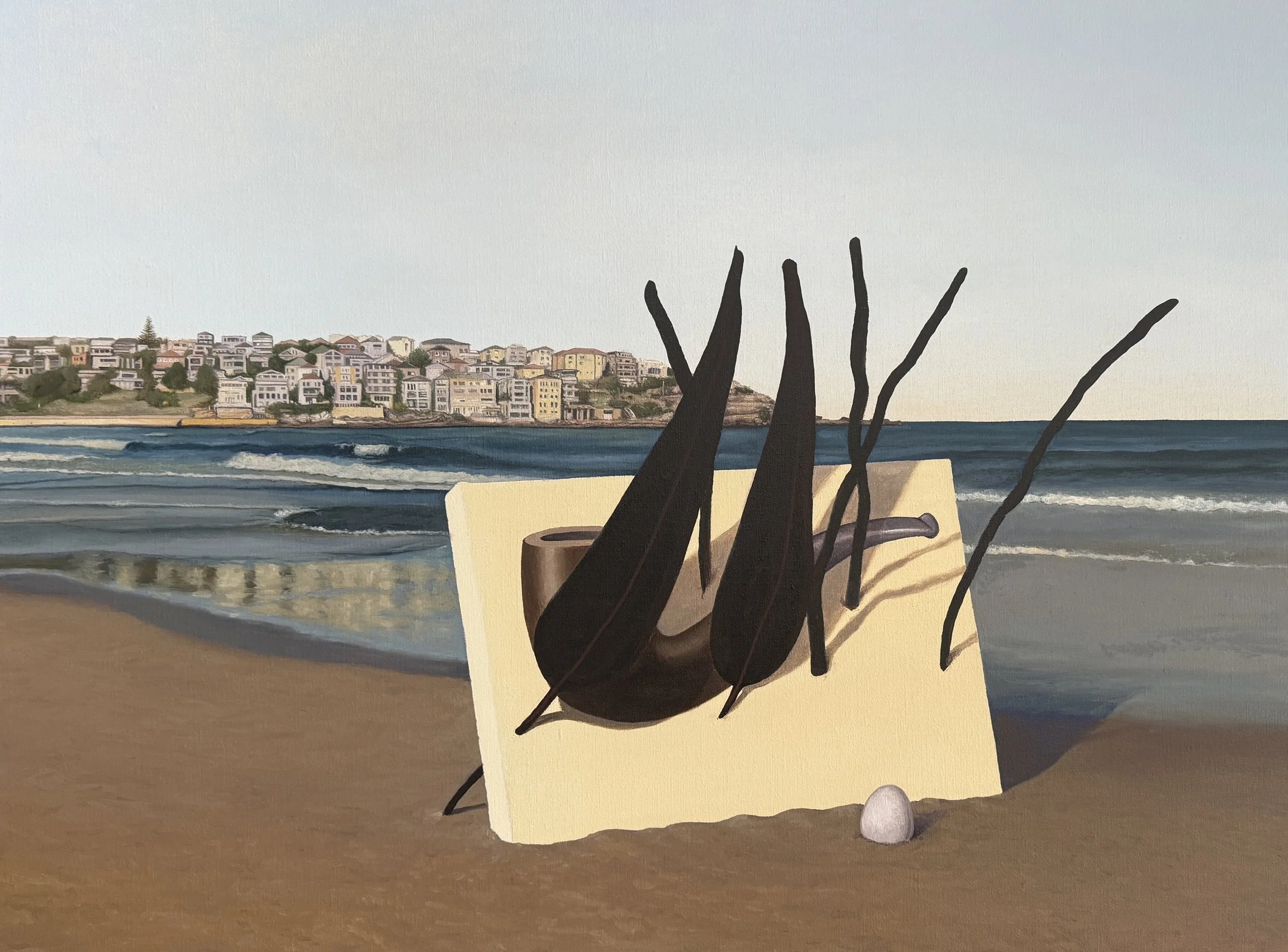
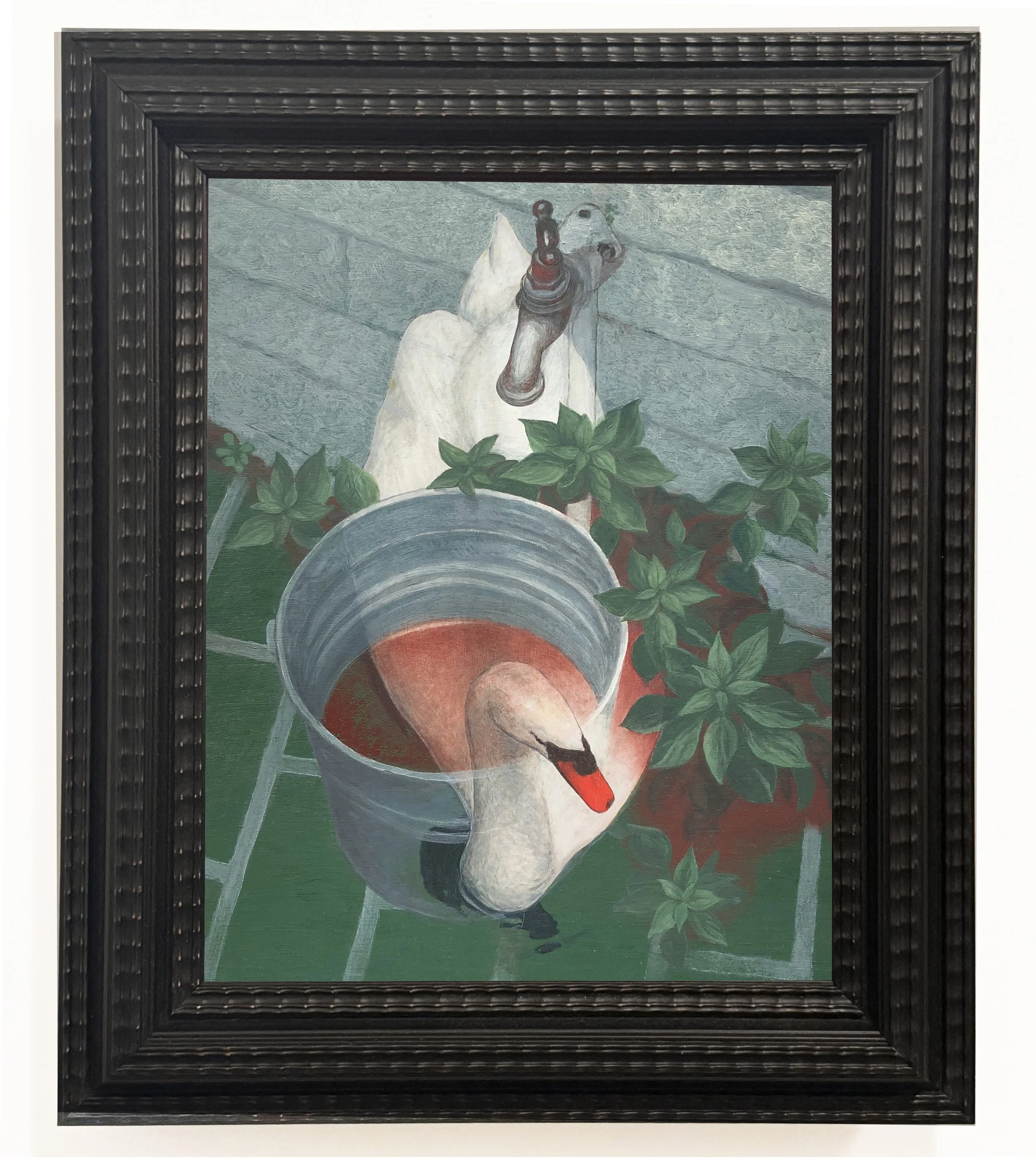
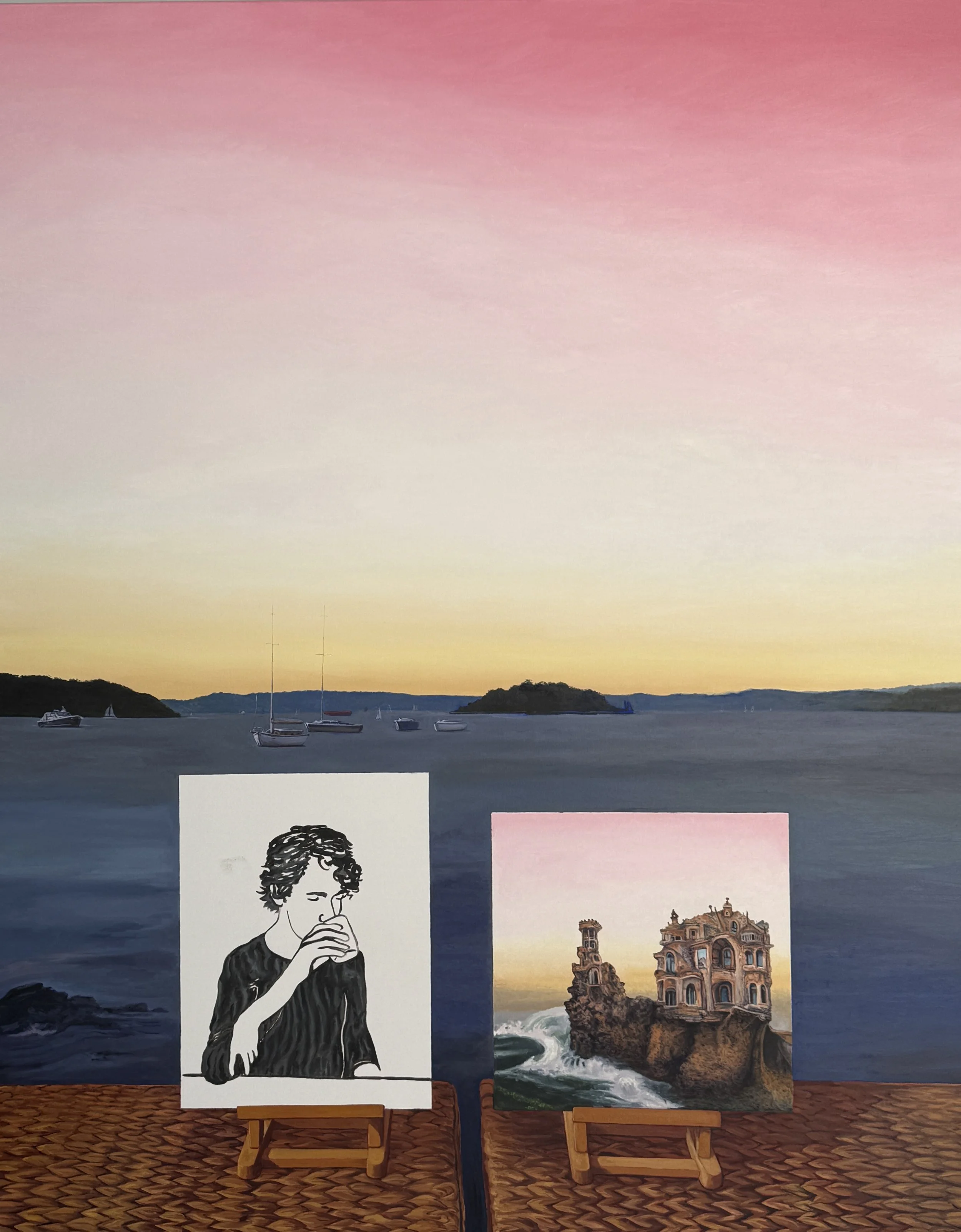
In this artwork we encounter a “painting within a painting.” Normally, when we look at a realistic painting on a wall, the image inside the frame provides contrast to the real world around us, making our reality feel more solid in contrast to the image’s fictional or abstract or theatrical world. The real world is one of the measures by which we assess the painting’s depicted world.
However, in this piece, the small easel painting flips that logic. Here, the “meta-painting” inside the scene also borrows reality from its surroundings. Yet while the background satisfies our scenic sensibility, many of the details defy logic; it is an untrustworthy source of verification. In other words, the form makes us value the painted world inside the painting as if it holds its own layer of truth, a core layer, separate from context, more focussed and animating than the visible context, reversing the usual relationship between art and reality. Consequently, it is a painting that encourages you to look away from everyday reality, and focus on reaching the pink vision.
Bibliography:
This is Not a Surrealism - A Manifesto for and against the Simulcara of Surrealism,
Sydney: Apothecary Archive Publishing, 2024.
“Ontological Withdrawal and the Symbols of Symbolism” Senzacornice - Rivista online di arte contemporanea e critica, 23 “Simbolo”, Nov 2020 - Feb 2021.
Studies:
Hunter’s Dog
Booklet, 70 pages with black and white illustrations, $25.
https://apothecaryarchive.com/the-apothecary-archive-press-1/this-is-not-a-surrealism-by-simon-weir
In recognition of a preoccupation with the problems of the simulacra, there are increasingly images of images
The appearance and disappearance of an image.
And all of this occurring while an urge towards dwelling can be recognised in the construction of space and forms of covering and shelter.
One evening I was retiring in bed looking across the room at my painting, “Melancholy of the Moment (Ecologies of inception), and I instantaneously imagined that painting painted onto an egg.
https://www.instagram.com/reel/DYtSInGhnwi/?igsh=MXhlN3BmdjAxdjNyeA==
A Portrait as a collection of objects, as an interrelationship between active personalities, concrete objects, some confusions, and some illusions.
+
Exhibitions:
2023, “SUPRA: 100 Years of Global Connections” International Student Lounge, The University of Sydney, NSW.
Finalist: 2020 “Lethbridge 20 000 Small Scale Art Award” Lethbridge Gallery, Paddington QLD.
Finalist: 2020 “Collie Art Prize” Collie Art Gallery, Collie WA.
+
Prints Available:
https://www.pineapplegallery.com.au/buy-prints/simon-weir-sensual-ontographic-assemblage-portrait-of-my-wife/
Studies: Electrolyte Requiem.
The Architectural Uncanny is a transitional painting, and return to dream-oriented, unconsciously figured, inspirationally motivated, Surrealism. Drawn in a Catalan cafe over 5 days, then painted with great intensity in two sessions one on Figueres then one in Sydney three years later. It depicts an unconscious, multi-generational, romantic idealisation in the appearance of four people, uncanny architecture, public sculpture and distant landscape.
The shadows we cast onto our landscapes, and the spectres that seem so real but defy validation. We live in both the real and the imaginary.
The painting in the painting exists as a separate study - see here.
+
Exhibitions:
Finalist: 2022 “Lethbridge 20 000 Small Scale Art Award”, Lethbridge Gallery, Paddington QLD.
Shortlist, 2021 “Into the Light”, Whitewall Art Prize, Berrima NSW.
Painting recoloured 2022.
Featured in Talking with Painters "Entrants to the 2024 Archibald, Wynne and Sulman prizes talk with Maria Stoljar" (YouTube)
In the infra-realism of object-oriented ontology, reality is withdrawn behind the sensual. Art’s sensual objects have conscious and unconscious qualities that generate convincing illusions of impossible objects. When the subject of art is the withdrawn real, we see concealing veils.
The Blackfeather Sanctuary is celebrated and elevated while remaining withdrawn, veiled, decoyed, tended and guarded.
+
Exhibitions:
Finalist: 2021 “Lethbridge 20 000 Small Scale Art Award”, Lethbridge Gallery, Paddington QLD.
Bibliography:
“Ontological Withdrawal and the Symbols of Symbolism” Senzacornice - Rivista online di arte contemporanea e critica, 23 “Simbolo”, Nov 2020 - Feb 2021.
“Object Oriented Ontology and Architectural Darkness”
Odyssey, Harvest, Sydney, 2021, pp.148-151.
In this artwork we encounter a “painting within a painting.” Normally, when we look at a realistic painting on a wall, the image inside the frame provides contrast to the real world around us, making our reality feel more solid in contrast to the image’s fictional or abstract or theatrical world. The real world is one of the measures by which we assess the painting’s depicted world.
However, in this piece, the small easel painting flips that logic. Here, the “meta-painting” inside the scene also borrows reality from its surroundings. Yet while the background satisfies our scenic sensibility, many of the details defy logic; it is an untrustworthy source of verification. In other words, the form makes us value the painted world inside the painting as if it holds its own layer of truth, a core layer, separate from context, more focussed and animating than the visible context, reversing the usual relationship between art and reality. Consequently, it is a painting that encourages you to look away from everyday reality, and focus on reaching the pink vision.